


*Please note: Images are for illustrative purposes only. Actual colors, finishes, and product packaging may vary slightly from what appears online.
Safety & Security Film
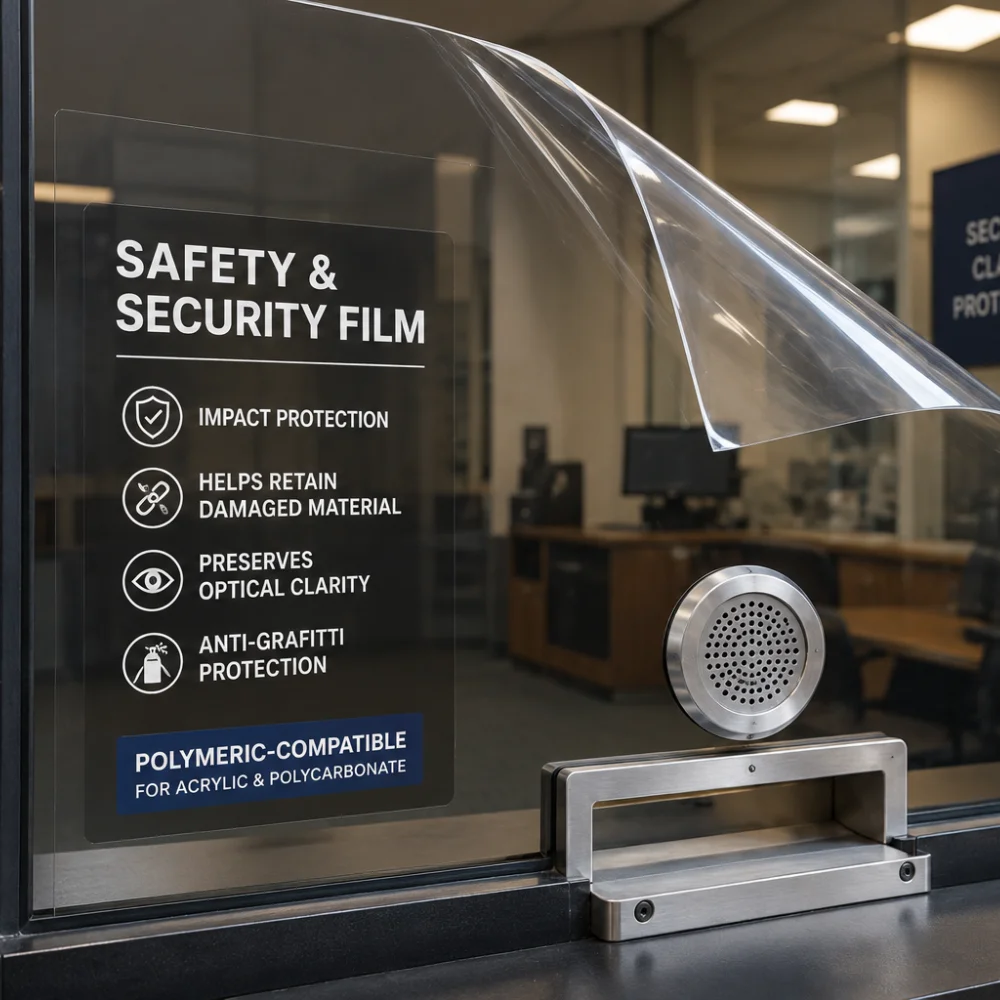
Polymeric-Compatible Safety & Security Film is a specialised protective film or laminate designed for use on selected acrylic and polycarbonate glazing.
Applied to compatible substrates such as Perspex®, PLEXIGLAS®, Makrolon® and LEXAN™, the film provides an additional protective layer that can help retain damaged material, protect the viewing surface and improve the overall performance of polymeric glazing in high-security environments.
It is suitable for banks, correctional facilities, defence facilities, data centres, government buildings and selected mining applications where clear visibility, impact resistance and controlled access are essential.
Contact us for pricing
Description
Polymeric-Compatible Safety & Security Film
Polymeric-Compatible Safety & Security Film is a specialised protective film engineered for selected acrylic and polycarbonate glazing. Applied to compatible substrates including Perspex®, PLEXIGLAS®, Makrolon® and LEXAN™, the film provides an additional protective layer that helps protect the glazing surface while improving the long-term performance of polymeric security glazing.
Designed specifically for rigid plastic substrates, the film incorporates specialised adhesive technology that accommodates the unique characteristics of acrylic and polycarbonate, including thermal movement, moisture release and substrate outgassing. This helps reduce the risk of bubbling and adhesion issues commonly associated with conventional glass safety films.
Suitable for banks, correctional facilities, defence projects, government buildings, data centres, mining operations and industrial environments, Polymeric-Compatible Safety & Security Film offers a practical solution where clear visibility, impact resistance and surface protection are essential.
Key Features & Common Applications
Key Features
|
Common Applications
|
Polymeric-Compatible Safety & Security Film helps extend the life of valuable polymeric glazing while providing additional protection against abrasion, vandalism and accidental damage.
How the Film Works
Acrylic and polycarbonate are widely used as alternatives to glass because they are lighter and provide significantly greater impact resistance than ordinary glass. Acrylic offers exceptional optical clarity, while polycarbonate provides outstanding impact performance.
Despite these advantages, polymeric glazing remains susceptible to scratching, abrasion, chemical attack and repeated physical damage. Polymeric-Compatible Safety & Security Film provides a clear supplementary protective layer that helps preserve the original glazing surface.
Depending on the selected product and glazing construction, the film may help:
- Retain cracked or fractured acrylic
- Protect polycarbonate surfaces
- Reduce scratching and abrasion
- Improve resistance to graffiti and deliberate damage
- Reduce loose fragments following damage
- Maintain optical clarity
- Extend the service life of expensive security glazing
High-Security Applications
| Industry | Typical Applications |
|---|---|
| Banks & Financial Institutions | Teller screens Cash handling areas Secure counters ATM glazing Payment terminals Cash processing facilities Secure entry glazing |
| Correctional Facilities | Cell-door viewing panels Officer observation windows Control rooms Visitation screens Holding-cell glazing Secure partitions Correctional transport glazing |
| Defence & Government | Security checkpoints Guard stations Control centres Observation windows Military facilities Embassies Protective vehicle glazing |
| Data Centres | Server-room windows Security control rooms Restricted-access partitions Monitoring screens Identity verification areas Network operations centres |
| Mining & Heavy Industry | Equipment cabins Excavator windows Loader glazing Drill rigs Machine guards Processing plants Electrical enclosures |
Use with Armour-Grade Glazing Systems
Polymeric-Compatible Safety & Security Film may be incorporated into selected armour-grade acrylic or polycarbonate glazing systems to provide additional surface protection or improved material retention.
High-security glazing systems such as ballistic laminates, forced-entry-resistant panels and armour-grade polycarbonate are engineered assemblies whose performance depends on:
- Substrate material and thickness
- Number and type of laminated layers
- Film and adhesive construction
- Panel dimensions
- Frame strength
- Edge-retention system
- Fixing and attachment method
- Tested threat classification
Important: Applying film alone does not make standard acrylic or polycarbonate bullet-resistant, blast-resistant or forced-entry certified.
Product Benefits
| Feature | Benefit |
|---|---|
| Clear Protective Layer | Maintains excellent visibility while protecting valuable glazing. |
| Surface Protection | Helps reduce scratching, abrasion and graffiti damage. |
| Material Retention | May help retain damaged acrylic and reduce loose fragments. |
| Polymeric-Compatible Adhesive | Designed specifically for acrylic and polycarbonate substrates. |
| Longer Service Life | Helps protect expensive security glazing and reduce replacement costs. |
| Retrofit Installation | Can upgrade existing compatible glazing without replacing complete panels. |
Important Substrate Requirements
Product selection should consider:
- Acrylic or polycarbonate brand and grade
- Sheet thickness
- Cast or extruded acrylic construction
- Hard-coated or non-hard-coated surface
- Existing scratches, crazing or chemical damage
- Interior or exterior exposure
- Required security level
- Cleaning chemicals used on the glazing
Hard-coated acrylic and polycarbonate may require specialised film systems because conventional adhesives may not bond correctly. Adhesion and compatibility testing is recommended before full installation.
Important Performance Information
Safety and security performance is determined by the complete glazing assembly rather than the film alone.
Standard architectural safety films are generally designed and tested for glass. Acrylic and polycarbonate require specialised polymeric-compatible films or engineered laminates to achieve optimum long-term performance.
Where ballistic resistance, forced-entry protection, blast mitigation, detention security or critical infrastructure performance is required, the proposed glazing panel, film, framing system and attachment method should be assessed against the relevant project standard or independently tested construction.
Supply, Technical Support & Custom Solutions
Altius Polymers supplies Polymeric-Compatible Safety & Security Films for specialised commercial, government, mining, industrial and critical infrastructure projects throughout Australia. Our technical team can assist with substrate compatibility, product selection and customised glazing solutions based on your security requirements.
Please contact Altius Polymers with the substrate brand, material grade, sheet thickness, coating type and required security performance so we can recommend the most appropriate Safety & Security Film solution for your application.
Polymeric-Compatible Safety & Security Film
Polymeric-Compatible Safety & Security Film is a specialised protective film engineered for selected acrylic and polycarbonate glazing. Applied to compatible substrates including Perspex®, PLEXIGLAS®, Makrolon® and LEXAN™, the film provides an additional protective layer that helps protect the glazing surface while improving the long-term performance of polymeric security glazing.
Designed specifically for rigid plastic substrates, the film incorporates specialised adhesive technology that accommodates the unique characteristics of acrylic and polycarbonate, including thermal movement, moisture release and substrate outgassing. This helps reduce the risk of bubbling and adhesion issues commonly associated with conventional glass safety films.
Suitable for banks, correctional facilities, defence projects, government buildings, data centres, mining operations and industrial environments, Polymeric-Compatible Safety & Security Film offers a practical solution where clear visibility, impact resistance and surface protection are essential.
Key Features & Common Applications
Key Features
|
Common Applications
|
Polymeric-Compatible Safety & Security Film helps extend the life of valuable polymeric glazing while providing additional protection against abrasion, vandalism and accidental damage.
How the Film Works
Acrylic and polycarbonate are widely used as alternatives to glass because they are lighter and provide significantly greater impact resistance than ordinary glass. Acrylic offers exceptional optical clarity, while polycarbonate provides outstanding impact performance.
Despite these advantages, polymeric glazing remains susceptible to scratching, abrasion, chemical attack and repeated physical damage. Polymeric-Compatible Safety & Security Film provides a clear supplementary protective layer that helps preserve the original glazing surface.
Depending on the selected product and glazing construction, the film may help:
- Retain cracked or fractured acrylic
- Protect polycarbonate surfaces
- Reduce scratching and abrasion
- Improve resistance to graffiti and deliberate damage
- Reduce loose fragments following damage
- Maintain optical clarity
- Extend the service life of expensive security glazing
High-Security Applications
| Industry | Typical Applications |
|---|---|
| Banks & Financial Institutions | Teller screens Cash handling areas Secure counters ATM glazing Payment terminals Cash processing facilities Secure entry glazing |
| Correctional Facilities | Cell-door viewing panels Officer observation windows Control rooms Visitation screens Holding-cell glazing Secure partitions Correctional transport glazing |
| Defence & Government | Security checkpoints Guard stations Control centres Observation windows Military facilities Embassies Protective vehicle glazing |
| Data Centres | Server-room windows Security control rooms Restricted-access partitions Monitoring screens Identity verification areas Network operations centres |
| Mining & Heavy Industry | Equipment cabins Excavator windows Loader glazing Drill rigs Machine guards Processing plants Electrical enclosures |
Use with Armour-Grade Glazing Systems
Polymeric-Compatible Safety & Security Film may be incorporated into selected armour-grade acrylic or polycarbonate glazing systems to provide additional surface protection or improved material retention.
High-security glazing systems such as ballistic laminates, forced-entry-resistant panels and armour-grade polycarbonate are engineered assemblies whose performance depends on:
- Substrate material and thickness
- Number and type of laminated layers
- Film and adhesive construction
- Panel dimensions
- Frame strength
- Edge-retention system
- Fixing and attachment method
- Tested threat classification
Important: Applying film alone does not make standard acrylic or polycarbonate bullet-resistant, blast-resistant or forced-entry certified.
Product Benefits
| Feature | Benefit |
|---|---|
| Clear Protective Layer | Maintains excellent visibility while protecting valuable glazing. |
| Surface Protection | Helps reduce scratching, abrasion and graffiti damage. |
| Material Retention | May help retain damaged acrylic and reduce loose fragments. |
| Polymeric-Compatible Adhesive | Designed specifically for acrylic and polycarbonate substrates. |
| Longer Service Life | Helps protect expensive security glazing and reduce replacement costs. |
| Retrofit Installation | Can upgrade existing compatible glazing without replacing complete panels. |
Important Substrate Requirements
Product selection should consider:
- Acrylic or polycarbonate brand and grade
- Sheet thickness
- Cast or extruded acrylic construction
- Hard-coated or non-hard-coated surface
- Existing scratches, crazing or chemical damage
- Interior or exterior exposure
- Required security level
- Cleaning chemicals used on the glazing
Hard-coated acrylic and polycarbonate may require specialised film systems because conventional adhesives may not bond correctly. Adhesion and compatibility testing is recommended before full installation.
Important Performance Information
Safety and security performance is determined by the complete glazing assembly rather than the film alone.
Standard architectural safety films are generally designed and tested for glass. Acrylic and polycarbonate require specialised polymeric-compatible films or engineered laminates to achieve optimum long-term performance.
Where ballistic resistance, forced-entry protection, blast mitigation, detention security or critical infrastructure performance is required, the proposed glazing panel, film, framing system and attachment method should be assessed against the relevant project standard or independently tested construction.
Supply, Technical Support & Custom Solutions
Altius Polymers supplies Polymeric-Compatible Safety & Security Films for specialised commercial, government, mining, industrial and critical infrastructure projects throughout Australia. Our technical team can assist with substrate compatibility, product selection and customised glazing solutions based on your security requirements.
Please contact Altius Polymers with the substrate brand, material grade, sheet thickness, coating type and required security performance so we can recommend the most appropriate Safety & Security Film solution for your application.
 Overview
Specification
Overview
Description
Polymeric-Compatible Safety & Security Film
Polymeric-Compatible Safety & Security Film is a specialised protective film engineered for selected acrylic and polycarbonate glazing. Applied to compatible substrates including Perspex®, PLEXIGLAS®, Makrolon® and LEXAN™, the film provides an additional protective layer that helps protect the glazing surface while improving the long-term performance of polymeric security glazing.
Designed specifically for rigid plastic substrates, the film incorporates specialised adhesive technology that accommodates the unique characteristics of acrylic and polycarbonate, including thermal movement, moisture release and substrate outgassing. This helps reduce the risk of bubbling and adhesion issues commonly associated with conventional glass safety films.
Suitable for banks, correctional facilities, defence projects, government buildings, data centres, mining operations and industrial environments, Polymeric-Compatible Safety & Security Film offers a practical solution where clear visibility, impact resistance and surface protection are essential.
Key Features & Common Applications
Key Features
|
Common Applications
|
Polymeric-Compatible Safety & Security Film helps extend the life of valuable polymeric glazing while providing additional protection against abrasion, vandalism and accidental damage.
How the Film Works
Acrylic and polycarbonate are widely used as alternatives to glass because they are lighter and provide significantly greater impact resistance than ordinary glass. Acrylic offers exceptional optical clarity, while polycarbonate provides outstanding impact performance.
Despite these advantages, polymeric glazing remains susceptible to scratching, abrasion, chemical attack and repeated physical damage. Polymeric-Compatible Safety & Security Film provides a clear supplementary protective layer that helps preserve the original glazing surface.
Depending on the selected product and glazing construction, the film may help:
- Retain cracked or fractured acrylic
- Protect polycarbonate surfaces
- Reduce scratching and abrasion
- Improve resistance to graffiti and deliberate damage
- Reduce loose fragments following damage
- Maintain optical clarity
- Extend the service life of expensive security glazing
High-Security Applications
| Industry | Typical Applications |
|---|---|
| Banks & Financial Institutions | Teller screens Cash handling areas Secure counters ATM glazing Payment terminals Cash processing facilities Secure entry glazing |
| Correctional Facilities | Cell-door viewing panels Officer observation windows Control rooms Visitation screens Holding-cell glazing Secure partitions Correctional transport glazing |
| Defence & Government | Security checkpoints Guard stations Control centres Observation windows Military facilities Embassies Protective vehicle glazing |
| Data Centres | Server-room windows Security control rooms Restricted-access partitions Monitoring screens Identity verification areas Network operations centres |
| Mining & Heavy Industry | Equipment cabins Excavator windows Loader glazing Drill rigs Machine guards Processing plants Electrical enclosures |
Use with Armour-Grade Glazing Systems
Polymeric-Compatible Safety & Security Film may be incorporated into selected armour-grade acrylic or polycarbonate glazing systems to provide additional surface protection or improved material retention.
High-security glazing systems such as ballistic laminates, forced-entry-resistant panels and armour-grade polycarbonate are engineered assemblies whose performance depends on:
- Substrate material and thickness
- Number and type of laminated layers
- Film and adhesive construction
- Panel dimensions
- Frame strength
- Edge-retention system
- Fixing and attachment method
- Tested threat classification
Important: Applying film alone does not make standard acrylic or polycarbonate bullet-resistant, blast-resistant or forced-entry certified.
Product Benefits
| Feature | Benefit |
|---|---|
| Clear Protective Layer | Maintains excellent visibility while protecting valuable glazing. |
| Surface Protection | Helps reduce scratching, abrasion and graffiti damage. |
| Material Retention | May help retain damaged acrylic and reduce loose fragments. |
| Polymeric-Compatible Adhesive | Designed specifically for acrylic and polycarbonate substrates. |
| Longer Service Life | Helps protect expensive security glazing and reduce replacement costs. |
| Retrofit Installation | Can upgrade existing compatible glazing without replacing complete panels. |
Important Substrate Requirements
Product selection should consider:
- Acrylic or polycarbonate brand and grade
- Sheet thickness
- Cast or extruded acrylic construction
- Hard-coated or non-hard-coated surface
- Existing scratches, crazing or chemical damage
- Interior or exterior exposure
- Required security level
- Cleaning chemicals used on the glazing
Hard-coated acrylic and polycarbonate may require specialised film systems because conventional adhesives may not bond correctly. Adhesion and compatibility testing is recommended before full installation.
Important Performance Information
Safety and security performance is determined by the complete glazing assembly rather than the film alone.
Standard architectural safety films are generally designed and tested for glass. Acrylic and polycarbonate require specialised polymeric-compatible films or engineered laminates to achieve optimum long-term performance.
Where ballistic resistance, forced-entry protection, blast mitigation, detention security or critical infrastructure performance is required, the proposed glazing panel, film, framing system and attachment method should be assessed against the relevant project standard or independently tested construction.
Supply, Technical Support & Custom Solutions
Altius Polymers supplies Polymeric-Compatible Safety & Security Films for specialised commercial, government, mining, industrial and critical infrastructure projects throughout Australia. Our technical team can assist with substrate compatibility, product selection and customised glazing solutions based on your security requirements.
Please contact Altius Polymers with the substrate brand, material grade, sheet thickness, coating type and required security performance so we can recommend the most appropriate Safety & Security Film solution for your application.
Review
Specification
Overview
 Processor
 Display
 RAM
RAM
Description
Polymeric-Compatible Safety & Security Film
Polymeric-Compatible Safety & Security Film is a specialised protective film engineered for selected acrylic and polycarbonate glazing. Applied to compatible substrates including Perspex®, PLEXIGLAS®, Makrolon® and LEXAN™, the film provides an additional protective layer that helps protect the glazing surface while improving the long-term performance of polymeric security glazing.
Designed specifically for rigid plastic substrates, the film incorporates specialised adhesive technology that accommodates the unique characteristics of acrylic and polycarbonate, including thermal movement, moisture release and substrate outgassing. This helps reduce the risk of bubbling and adhesion issues commonly associated with conventional glass safety films.
Suitable for banks, correctional facilities, defence projects, government buildings, data centres, mining operations and industrial environments, Polymeric-Compatible Safety & Security Film offers a practical solution where clear visibility, impact resistance and surface protection are essential.
Key Features & Common Applications
Key Features
|
Common Applications
|
Polymeric-Compatible Safety & Security Film helps extend the life of valuable polymeric glazing while providing additional protection against abrasion, vandalism and accidental damage.
How the Film Works
Acrylic and polycarbonate are widely used as alternatives to glass because they are lighter and provide significantly greater impact resistance than ordinary glass. Acrylic offers exceptional optical clarity, while polycarbonate provides outstanding impact performance.
Despite these advantages, polymeric glazing remains susceptible to scratching, abrasion, chemical attack and repeated physical damage. Polymeric-Compatible Safety & Security Film provides a clear supplementary protective layer that helps preserve the original glazing surface.
Depending on the selected product and glazing construction, the film may help:
- Retain cracked or fractured acrylic
- Protect polycarbonate surfaces
- Reduce scratching and abrasion
- Improve resistance to graffiti and deliberate damage
- Reduce loose fragments following damage
- Maintain optical clarity
- Extend the service life of expensive security glazing
High-Security Applications
| Industry | Typical Applications |
|---|---|
| Banks & Financial Institutions | Teller screens Cash handling areas Secure counters ATM glazing Payment terminals Cash processing facilities Secure entry glazing |
| Correctional Facilities | Cell-door viewing panels Officer observation windows Control rooms Visitation screens Holding-cell glazing Secure partitions Correctional transport glazing |
| Defence & Government | Security checkpoints Guard stations Control centres Observation windows Military facilities Embassies Protective vehicle glazing |
| Data Centres | Server-room windows Security control rooms Restricted-access partitions Monitoring screens Identity verification areas Network operations centres |
| Mining & Heavy Industry | Equipment cabins Excavator windows Loader glazing Drill rigs Machine guards Processing plants Electrical enclosures |
Use with Armour-Grade Glazing Systems
Polymeric-Compatible Safety & Security Film may be incorporated into selected armour-grade acrylic or polycarbonate glazing systems to provide additional surface protection or improved material retention.
High-security glazing systems such as ballistic laminates, forced-entry-resistant panels and armour-grade polycarbonate are engineered assemblies whose performance depends on:
- Substrate material and thickness
- Number and type of laminated layers
- Film and adhesive construction
- Panel dimensions
- Frame strength
- Edge-retention system
- Fixing and attachment method
- Tested threat classification
Important: Applying film alone does not make standard acrylic or polycarbonate bullet-resistant, blast-resistant or forced-entry certified.
Product Benefits
| Feature | Benefit |
|---|---|
| Clear Protective Layer | Maintains excellent visibility while protecting valuable glazing. |
| Surface Protection | Helps reduce scratching, abrasion and graffiti damage. |
| Material Retention | May help retain damaged acrylic and reduce loose fragments. |
| Polymeric-Compatible Adhesive | Designed specifically for acrylic and polycarbonate substrates. |
| Longer Service Life | Helps protect expensive security glazing and reduce replacement costs. |
| Retrofit Installation | Can upgrade existing compatible glazing without replacing complete panels. |
Important Substrate Requirements
Product selection should consider:
- Acrylic or polycarbonate brand and grade
- Sheet thickness
- Cast or extruded acrylic construction
- Hard-coated or non-hard-coated surface
- Existing scratches, crazing or chemical damage
- Interior or exterior exposure
- Required security level
- Cleaning chemicals used on the glazing
Hard-coated acrylic and polycarbonate may require specialised film systems because conventional adhesives may not bond correctly. Adhesion and compatibility testing is recommended before full installation.
Important Performance Information
Safety and security performance is determined by the complete glazing assembly rather than the film alone.
Standard architectural safety films are generally designed and tested for glass. Acrylic and polycarbonate require specialised polymeric-compatible films or engineered laminates to achieve optimum long-term performance.
Where ballistic resistance, forced-entry protection, blast mitigation, detention security or critical infrastructure performance is required, the proposed glazing panel, film, framing system and attachment method should be assessed against the relevant project standard or independently tested construction.
Supply, Technical Support & Custom Solutions
Altius Polymers supplies Polymeric-Compatible Safety & Security Films for specialised commercial, government, mining, industrial and critical infrastructure projects throughout Australia. Our technical team can assist with substrate compatibility, product selection and customised glazing solutions based on your security requirements.
Please contact Altius Polymers with the substrate brand, material grade, sheet thickness, coating type and required security performance so we can recommend the most appropriate Safety & Security Film solution for your application.
Applications
Reviews
Clear filtersThere are no reviews yet.
You may also like




Reviews
Clear filtersThere are no reviews yet.